 The Science Dad
About me
Dr. Yannick Forster
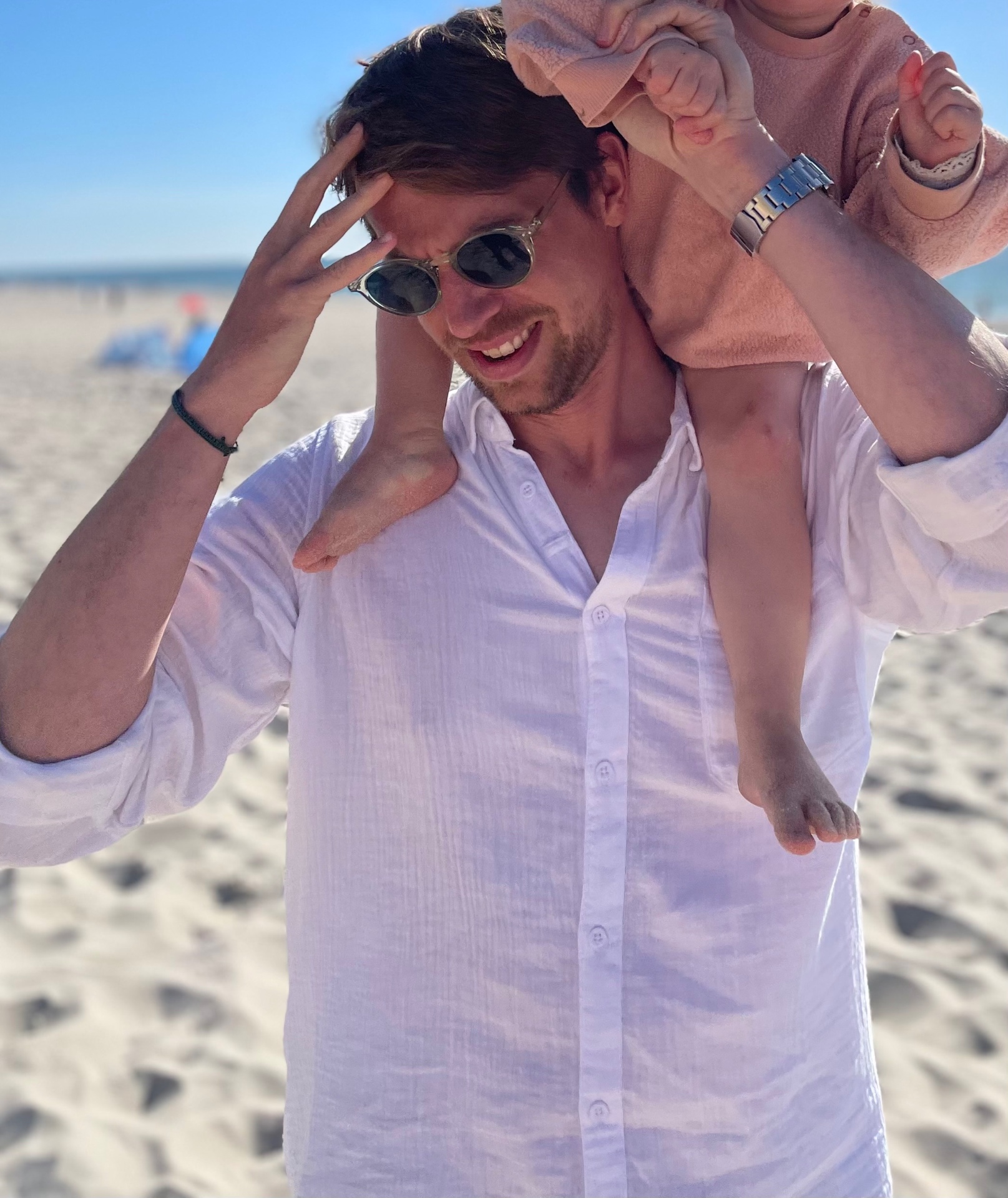
Psychologist, researcher, father. More than ten years in empirical research — and just as many years guiding others who want to learn how to work scientifically.
Who I am
My name is Dr. Yannick Forster. I studied psychology at the University of Würzburg and the University of Texas at Austin, and earned my PhD at TU Chemnitz. For the past ten years I have been working in research and development in the automotive industry, focusing on human–machine interaction, human factors and usability. That work has produced more than 40 publications in peer-reviewed journals and at international conferences as well as more than 100 invention disclosures and patents.
For more than ten years I have also served as a peer reviewer for established journals such as Transportation Research Part F and Accident Analysis and Prevention, and for international conferences such as AutomotiveUI and the Driving Assessment Conference. I assess other researchers' work for consistency, methodological soundness and the novelty of its contribution — exactly the criteria your own thesis will be measured against.
My specialty
My specialty is research methods and statistics. What many see as the driest part of empirical research is, for me, where the wheat is separated from the chaff. With this expertise behind you, you can rely on solid ground. My own training rests on two works — first Bortz & Schuster (Statistik für Human- und Sozialwissenschaftler), and then Tabachnick & Fidell (Using Multivariate Statistics). These two textbooks form an ideal combination for rigorous research and have accompanied me through every phase of academic work. In the same way, I'll accompany you reliably from your first hypothesis to the final analysis.
My path
A healthy dose of curiosity and the willingness to keep asking questions have carried me from the start. A year abroad in Austin, Texas, reinforced that: in a graduate course on statistics and data analysis with Matlab I gained further valuable insights, which added a hands-on tool to my methodological understanding.
Back in Germany, during my Master's and PhD I worked with driving-simulator and real-vehicle studies, recordings in many different formats, and the question that kept coming back: how do I turn this raw data into something I can actually work with? I was lucky never to be alone with that. Colleagues and mentors took the time to challenge my study designs, discuss my workflows and push back on my arguments. Over the years — through studies, internships, my PhD and industrial research — I have learned how scientific work really functions: how to set up a study, how to run it, and how to turn the results into a coherent, convincing story. That took many years and it is a process that never quite ends.
What I noticed along the way
Over the years, friends, acquaintances and friends of friends kept asking me to help with their theses. International business, psychology, education, human factors, sociology, social work. We would sit down — often more than once — and I noticed something: it's strikingly often the same topics. How do I structure my literature search? How do I formulate a testable hypothesis? Which statistics fit my data? How do you actually write a discussion that is more than a summary?
And I noticed how different people's starting conditions are. Some are at departments where they barely manage to get an appointment with their supervisor. Others have been handed a topic and have no one to discuss it with. The luck I had in my own training is far from given. It should be.
Why "The Science Dad"
I have two small daughters. My wife, also from psychology / human factors, and I talked about how to pass on a love of research and science to them. Shows like Löwenzahn or Bill Nye "The Science Guy" shaped us — they made science feel like an adventure. But sparking interest is one thing. At some point you need someone who reaches out a hand and shows the craft: ask questions, observe, hypothesize, test, evaluate, report, try again.
That is exactly the hand I want to offer students standing in front of their thesis. Not as a professor, not as an examiner, not as someone who writes for you. Rather as someone who has walked many of these paths — his own and other people's — and who sits down next to you when you get stuck. I want to continue the work of "The Science Guy".
Welcome to The Science Dad.